Showing posts with label Myofascial Release. Show all posts

Yin Is In!


When I first started taking yoga classes I focused on vinyasa flow classes.  I didn't know what I was doing, and that seemed like a good place to start.  It was.  But then, as my practice grew and I learned more about different types of yoga, I saw the benefit in branching out and trying new styles.

One style that always intrigued me was yin.  It seemed so different from "regular" fast paced, flowing yoga.  Yin was quiet, inward and deliciously difficult.  

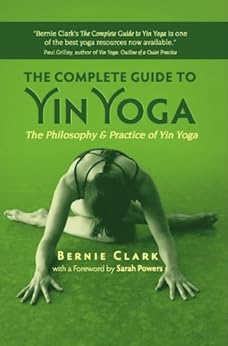
Yin is a relatively new type of yoga.  The yin style of yoga has always existed, but it wasn't until 30 years ago that Paulie Zink, Paul Grilley and Sarah Powers gave it a name and began refining and defining yin.  Bernie Clark, another yin guru, created a website devoted to it:  YinYoga.com

How is yin different from restorative yoga?  Both of these are passive practices but yin digs down deep into our connective tissues and restorative does not. Yin is NOT appropriate for people working through an injury.  Once an injury is healed, then yin may help restore range of motion and mobility.  Restorative, on the other hand, is very appropriate for those healing from injuries.

Yin is done when the muscles are cold.  You get on your mat, usually settle in with a meditative pose for a few minutes, and then begin your first yin pose, and hold for anywhere from 3-8 minutes, or longer.

Doing yin with the muscles cold (that is, not warmed up) allows the work to go deep into the connective tissue - the fascia that connects bones, ligaments, tendons, joints and muscle.  Most forms of yoga are active practices that work our muscular half, the "yang" tissues.  Yin is a nice complement to yang styles of yoga.  Many of us have active yang lifestyles that could use balancing with some inward yin awareness and acceptance.

Both yin and yang are necessary.  As Bernie Clark says, "We can be yang-like for only so long before crashing.  We can be yin-like for only so long before stagnating.  We need balance in all things."

There are fewer than 30 poses in yin.  And most of these focus on the pelvic area.  Here is a list of the poses from YinYoga.com.

Go try a yin class sometime and see what it adds to your practice.  Be patient. You may not fall in love with the first yin class you take.  Try a couple classes, experiment with different teachers before you decide if it's for you.

I teach yin in Reno on Wednesdays at 10:30am at the West Street Market. Sign up here: CommunitYogi.com


Yoga for Baseball Players


I teach yoga to youth sports clubs and athletes.  Young baseball players benefit in many ways from yoga.  I start my classes with fifteen minutes of foam rolling, followed by an hour of yoga.   
What does yoga, this 5000 year old practice, offer baseball players?
Mental toughness and calmness - Learning breathing techniques and holding poses while staying present in the mind helps athletes get in the zone and stay totally focused in tough situations.
Flexibility - Becoming more flexible in key areas like the hips, groins, neck, shoulders, spine and wrists helps players in the following ways: 
Open hips = less stress and strain on the knee joints, helps with quick, reactive moves on the field
Open groins = help with quick movements turning in either direction instantly on the field
Flexible neck = full rotation allowing for looking over each shoulder without moving the body
Flexible shoulders = reduction of stress on joint and increases power of the throw
Long, flexible spine = ability to look over the shoulder and throw out an opponent
Flexible wrists = ease of gripping the ball and the bat and recovering from diving catches


Strong Core - Strong abdominal muscles promote proper posture, support the back and make twists easier which helps players increase the speed at which their hips turn when up to bat or when running.
Stability and balance - Balance poses help keep the players' ankles flexible and strong.  This allows them to make quick changes of direction, and get strong push offs to initiate movement.
Overall, yoga helps baseball players with focus and concentration, flexibility, strength, coordination, mental calmness, balance and confidence, which is not only important for improving their game, but also many other aspects of their lives.  There is a reason yoga has been around for so long.  It works. It's a game changer.


I suggest that athletes incorporate some amount of yoga into their daily lives to complement the other healthy mental and physical activities they already do.  I encourage my students to try a little bit of yoga and/or foam rolling every day.  And,  3-5 yoga sessions per week is ideal.   This can be done at home, in a studio, at a gym, on the field before or after practice, in school, in a hotel room, etc. Five to ten minutes of yoga a day is better than none at all.  Do what works for your body, use props for support if you have them, get into your own head, stay present and let the benefits of yoga become clear to you.

Sources: 


Roll-Ga: Using the Foam Roller and Yoga for Athletes (and Non Athletes)

When I teach yoga to young athletes (and non athletes), I often add a fifteen-minute foam rolling routine into the class for myofascial release.  What is myofascial release?  When a masseuse does it for you...

If a masseuse is not available, we can give ourselves myofascial release, or self-massage, by using a foam roller and/or tennis ball.  There are hundreds of YouTube videos on foam rolling.  Check them out by searching for "foam roller" and "yoga therapy ball exercises" and you are ready to roll.


You can buy foam rollers at Target, Big 5, Amazon or any sport store.  They come in all different lengths and densities.  The denser the foam roller, the more intense the effect.

What is Myofascial Tissue or Fascia?

Myofascial tissue is a type of thin, strong, fibrous connective tissue that extends throughout your body to provide support and protection to your muscles and bones...You can think of myofascial tissue as being similar to a mesh bag that contains your groceries. It is pliable, and can expand and contract as the contents of the bag change. It envelops your body like a wet suit, from the tips of your toes to the top of your head.

A fascia is a layer of fibrous tissue.  It is a structure of connective tissue that surrounds muscles, groups of muscles, blood vessels, and nerves, binding some structures together, while permitting others to slide smoothly over each other.  Fasciae are similar to ligaments and tendons as they are all made of collagen except that ligaments join one bone to another bone, tendons join muscle to bone and fasciae connect muscles to other muscles.

Why do we need to roll and release fascia, or connective tissue?

Our daily activities can make us sore, stiff or injured.  These activities are basically everything we do all day and all night long, including driving, sitting, exercising, lifting, walking, operating, bending, typing, standing, knitting, cooking, reaching, texting, sleeping, etc.  These daily activities aren't bad, but the way we perform them can result in aches and pains that need to be addressed.

One way to address areas of tightness is to roll the connective tissue (fascia) with foam rollers and/or tennis balls.  You will know what areas need to be rolled the first time you try this.  The areas that hurt the most are the places you should focus on.

What good does rolling do?

If it hurts to roll, why roll?  If you roll every day, especially on your sorest muscles, it will likely become less painful.  Rolling releases muscle tightness, breaks up knots and adhesions that cause restriction in motion and create pain, and helps sore muscles recover to normal function more quickly.  Imagine that a knot in a muscle is like a knot in a bungie cord that gets pulled and pulled with daily activities, but not removed.  Myofascial release (foam rolling, using a tennis ball or massage) helps to loosen the knot which resumes normal blood flow and function to the muscle.
(See more here.)

And then you have to get up the next day and do it again.  Staying healthy and pain free is an ongoing, daily commitment.